The Caminito del Rey from Málaga: Timed Tickets, the One-Way Gorge, and Why You Book Weeks Ahead
A boardwalk bolted to a gorge wall a hundred meters up, walked one way, north to south, on a ticket you should have bought last month.
The short version
- Entry is €10, or €11.55 with the shuttle bus included, €18 with the official guided tour, booked only at caminitodelrey.info — ten tickets per purchaser, slots strictly enforced.
- The route runs one way, north to south: enter near Ardales, exit at El Chorro. The shuttle bus (€2.50, cash, every half hour) links the two ends — most walkers ride it first and walk back to the trains.
- Trains run Málaga María Zambrana to El Chorro–Caminito del Rey station in about 40 minutes; check the day’s times both ways at renfe.com — the return list is short.
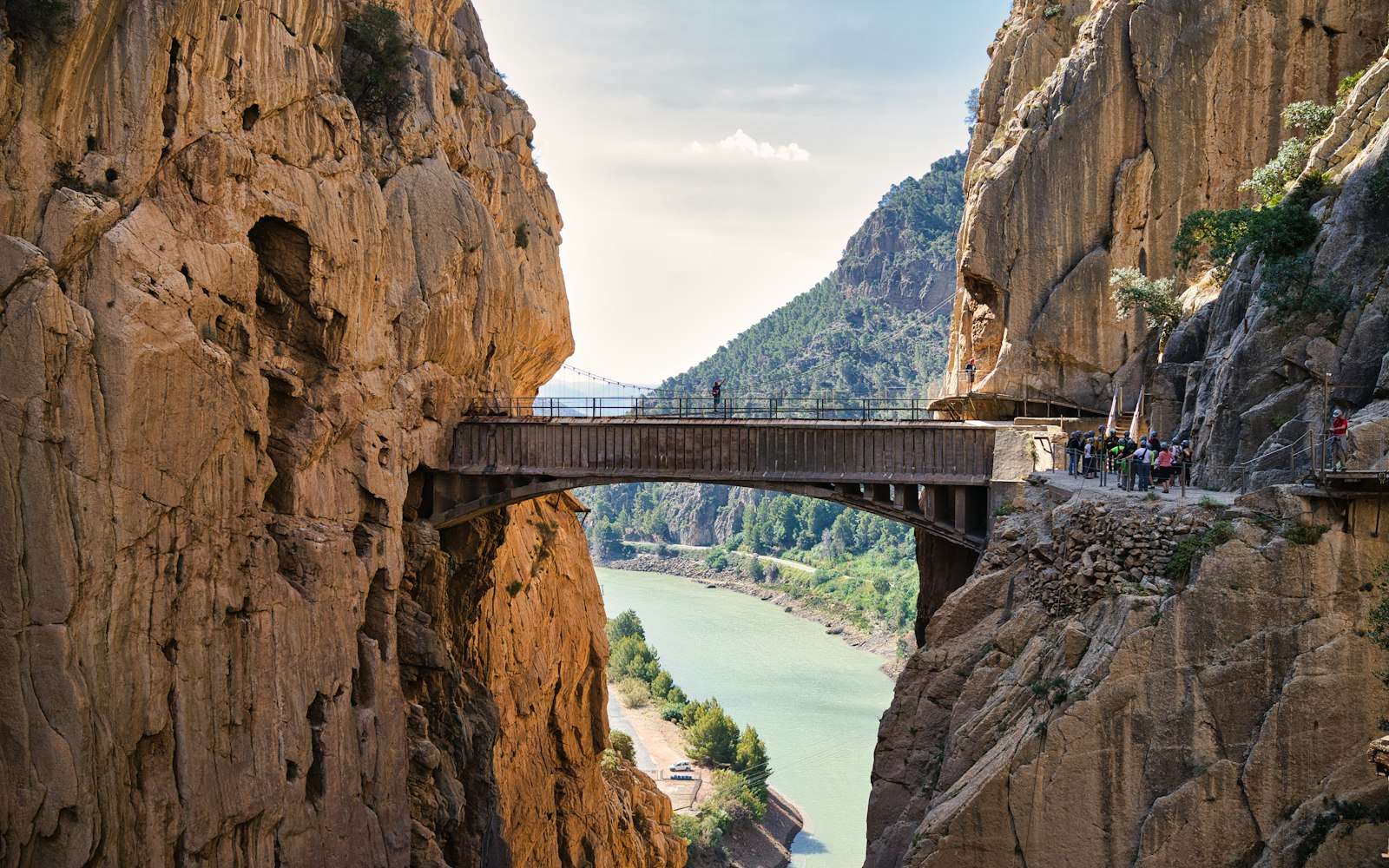
- The walkway is the famous part: a meter-wide boardwalk pinned to the gorge wall a hundred meters above the Guadalhorce, with a glass balcony and a wire-and-plank suspension bridge near the end.
- Helmets are provided and required; the full route runs about 7.7 kilometers including the access trails, gentle underfoot and one-directional by design.
- Vertigo honesty: the boardwalks are wide, railed, and solid, and they are still attached to a cliff. Most people who worry beforehand are fine; the suspension bridge is the one moment that tests the rest.

Getting there
The train is the clean version: about 40 minutes from Málaga María Zambrana to El Chorro station at the route’s southern exit. Ride the shuttle around to the northern entrance, walk back through the gorge to the trains, and the logistics close their own loop. Drivers park at either end and use the same shuttle; on busy days the northern lots fill by mid-morning. Whichever way you arrive, the ticket’s time slot is the fixed point the whole day bends around.
The walk
From the northern checkpoint the access trail runs to the gorge mouth, and then the boardwalks begin: the Gaitanes gorge narrows to ten meters wide with walls climbing 300, the old ruined royal path hanging below the new one as a reminder of why the rebuild happened. The middle section opens into a valley before the finale — the glass balcony, the suspension bridge, and the exit high over the railway that started it all. Three hours covers it with photo stops; there is no shade worth the name, and the kiosks sit only at the ends.
When to go
Spring is the argument: green slopes, full reservoirs, workable temperatures. Autumn matches it with amber light. Summer slots run hot on the exposed sections — book the earliest times and carry real water. Winter works on calm days and cancels on wet ones; wind closes the path at short notice year-round, with date changes rather than refunds the standard remedy. Mondays are closed for maintenance, with a handful of announced exceptions in peak season — the official calendar is the referee.
Frequently Asked Questions
What if my dates are sold out?
The official guided-tour allocation (€18) sometimes holds slots after general entry sells out, and licensed operators bundle entry with transport. Failing both, change the dates — there is no gate to chance it at.
Is it safe and is it scary?
The rebuilt path is modern engineering inspected constantly; helmets are policy, not theater. The fear question is personal: high, open, and secure describes it — most self-described vertigo sufferers finish it smiling.
Can children do it?
Ages eight and up are admitted with adults. The distance and exposure suit steady walkers; the one-way design means no bailing halfway.
Which direction and which end do I start?
North to south is mandatory. From the trains at El Chorro, shuttle to the north entrance first, walk back to your platform — the reverse leaves you racing the shuttle for your train home.
Can I combine it with Antequera or the lakes?
Drivers can add the reservoir viewpoints or Antequera’s dolmens easily. By train, the walk plus the timetable is the day, and it is enough.