Nerja from Málaga: The Timed Caves, the Balcón de Europa, and the White Village Nobody Mentions
An hour east, Nerja hangs its palm-lined balcony over the Mediterranean and hides a cathedral-sized cave system behind the town. Book the caves’ slot first — then take the short bus up to the white village the crowds skip.
The short version
- ALSA buses run Málaga to Nerja along the coastal A-7 in about an hour at steady frequency — the rail line ends long before; tickets at alsa.com, and the return’s last departures are worth noting on arrival.
- The Cuevas de Nerja sell timed entries around €15–16 for the show circuit through chambers on a cathedral scale — including a central column the record-keepers measured at thirty-two meters, the world’s largest — booked ahead per the alarm at cuevadenerja.es.
- The caves sit above Maro, one short bus stop or a 45-minute coastal walk past the town — the slot’s timing decides which, and the summer festival stages concerts in the main chamber’s natural acoustics.
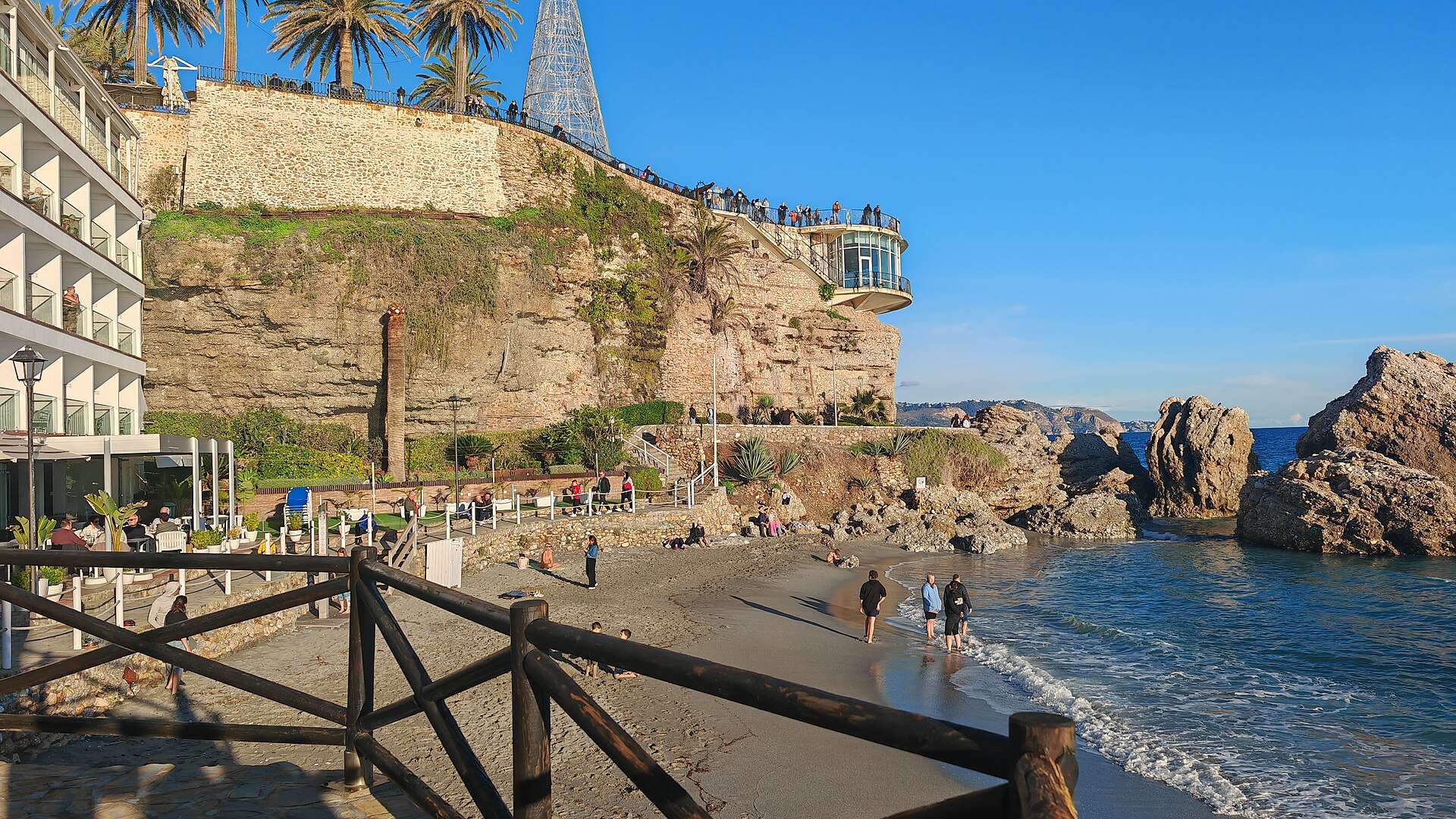
- The Balcón de Europa — the palm-lined promontory the town built where its fortress stood — delivers the coast-both-ways panorama that named itself; the obligatory stroll takes ten minutes and the alarm already granted permission.
- Frigiliana climbs its ravine seven kilometers inland — a Mudéjar white village of cobbled switchbacks, blue-trimmed doorways, and honey-and-wine shops — reached by a short local bus and holding, per the alarm, the day’s better photograph.
- Burriana beach east of the balcony runs the town’s proper sand with chiringuitos grilling sardine espetos on boat fires — the coast’s lunch ritual performed daily in season.

Getting there
Málaga’s bus station runs the Nerja corridor all day — sit right for the sea after Rincón — and Nerja’s stop lands five minutes from the balcony. The caves’ slot per the alarm anchors everything: a morning slot means caves first (the Maro bus or the coastal path), an afternoon slot flips the town half forward. Frigiliana’s local bus leaves from near Nerja’s main stop on a modest timetable worth photographing; taxis close the gap when it doesn’t cooperate. Drivers gain flexibility and lose the espeto-lunch wine; the standing math applies.
The day
Run it by the slot. Caves version first: the show circuit descends through chambers where the scale keeps recalibrating — the great column, the folded curtains of calcite, the hall where the summer festival seats an audience — an hour underground at a constant cool that summer makes medicinal. Then the town: the balcony’s stroll, the old quarter’s whitewash and bougainvillea, and Burriana for the espeto lunch eaten at boat-fire distance. The afternoon goes to Frigiliana: twenty minutes up, then switchback lanes that out-photograph the coast — the upper village’s viewpoints, the honey factory’s tastings, and the descent through blue-and-white geometry the tour buses mostly miss. Back down for a balcony sunset or straight to the ALSA; either way the day closes with the sea doing the lighting.
When to go
April to June and September to October give walking weather to a day that’s half outdoors and half underground; the caves hold their cool constant year-round, which makes them August’s best idea on this coast. July–August runs full beach-town throttle — the alarm’s booked slot graduates from advice to necessity, and Frigiliana’s evenings fill with escapees. The cave festival (July) sells its chamber concerts separately and fast. Winter is mild, quiet, and open — the balcony in low gold light, the village nearly private, and the espetos still smoking on the good days.
Frequently Asked Questions
Are the caves genuinely impressive or coach-tour filler?
Genuinely — the chambers run to scales that embarrass photographs, and the show circuit is well-lit without being Disneyfied. The prehistoric paintings sit off the public route (research access only), but the geology alone carries the ticket.
How does Frigiliana compare to the famous white villages?
It’s the coast’s compact answer to the Alpujarras’ postcard towns (documented on this network from Granada) — smaller than the famous circuit, better kept than most, and twenty minutes from a beach rather than two hours. As a half-day add it’s the region’s best ratio.
What’s an espeto exactly?
Sardines skewered on cane and grilled leaning over an open boat-fire on the sand — Málaga province’s signature lunch, priced by the skewer and eaten with fingers and lemon. Burriana’s chiringuitos perform it daily in season; joining in is not optional in spirit.
Nerja or the Caminito del Rey from Málaga?
The Caminito (documented on this network) for the gorge-walkway thrill with its own booking rules; Nerja for caves, coast, and village at gentler pulse. Different adrenaline settings — the booked-ahead discipline is the one thing they share.
Can I do the caves and skip the town?
The Maro-caves round trip works as a half day — but the balcony-Frigiliana-espeto circuit is why the full day exists. Skipping the town to rush back saves two hours and costs the trip’s character; the alarm’s architecture spends them better.