The Bus to Frigiliana
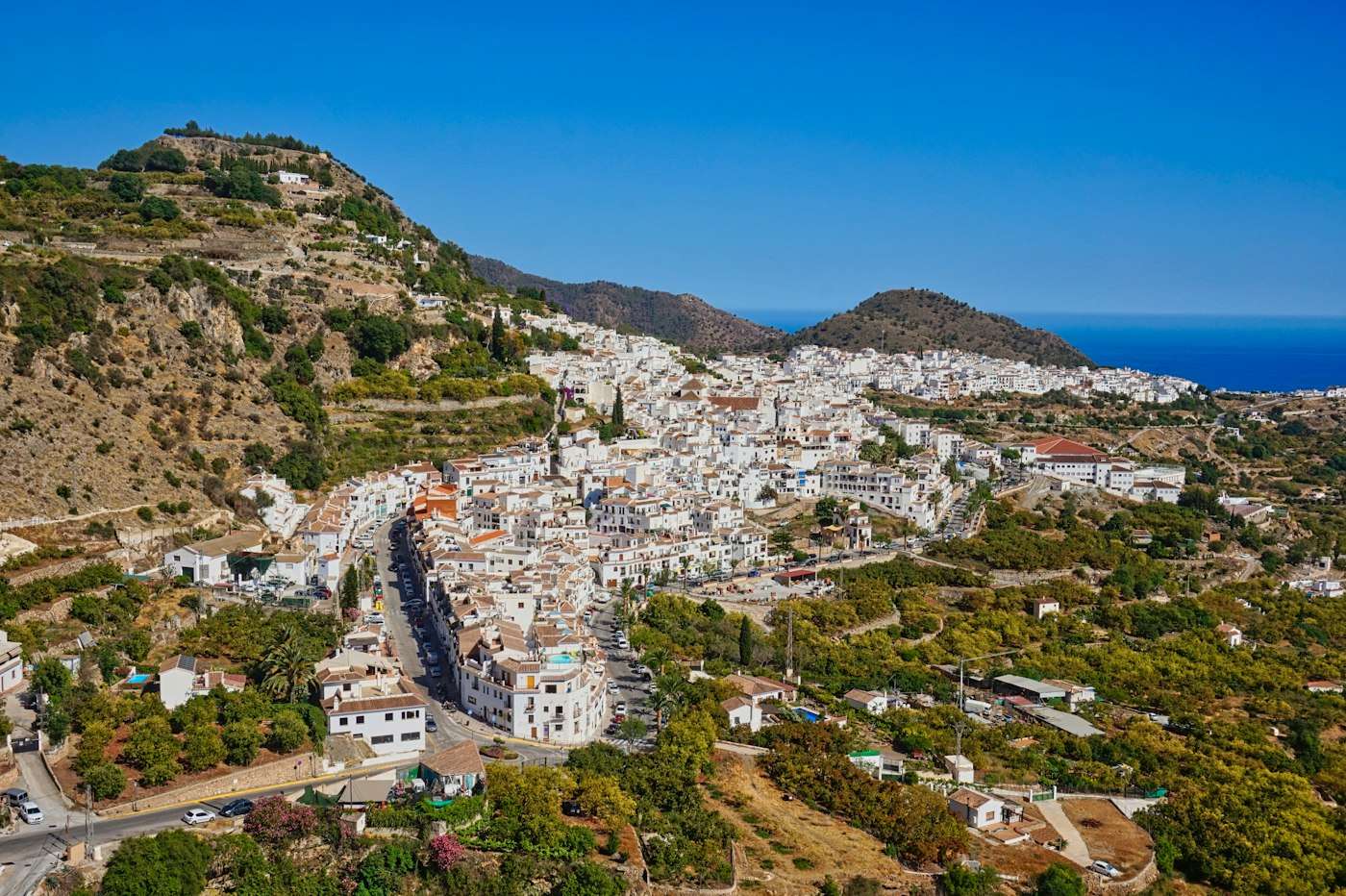
A Moorish hill town of cobbled lanes and blue pots above the sea — the classic white village, without renting a car.
The short version
- Buses run frequently from Málaga’s station to Nerja (roughly an hour to an hour and three quarters depending on stops) — timetables at alsa.com. From Nerja, the local shuttle bus climbs the 7 km to Frigiliana in about 20 minutes; buy from the driver.
- The old town — the Barribarto — is the point: stepped mudéjar lanes, lime-washed walls, cobble mosaics, and pots of geraniums doing exactly what the postcards promised. It is free, steep, and best before noon.
- Frigiliana calls itself the village of three cultures — Moorish, Jewish, and Christian — and an August festival fills the lanes with that theme; ceramic plaques along the walls tell the 1569 rebellion’s story house by house.
- The village still mills sugar cane into miel de caña — cane molasses — at the last working factory of its kind in Europe; taste it over fried aubergines, then carry a jar home. Town info at frigiliana.es.
- Pair it with Nerja on the same route: the Balcón de Europa’s sea terrace before or after, and the famous caves one stop further if the day stretches.

Getting there
From Málaga’s bus station, ALSA services run to Nerja throughout the day — express runs make it in about an hour, stopping services closer to an hour and three quarters. In Nerja, the local shuttle to Frigiliana leaves from near the main road stop and takes about 20 minutes up the 7 km hill road; tickets from the driver, small change appreciated. Drivers do Málaga–Frigiliana in about an hour, but the village is car-free at the top and the lower car parks fill by mid-morning in season.
The day
Climb into the Barribarto while the light is still slanted and the lanes are cool: the old Moorish quarter is a maze of stepped alleys, whitewash, and cobble patterns, and its logic is to get pleasantly lost uphill until the streets run out at viewpoints over the Mediterranean. The ceramic plaques on the walls narrate the Morisco rebellion of 1569, which ended on the Peñón above the village — Frigiliana wears its three-cultures history openly. Lunch on the terraces: fried aubergines with miel de caña is the town plate, and the molasses factory below the old town is the last of its line in Europe. Browse the small galleries and the honey-and-all shops, then ride down to Nerja for the Balcón de Europa, the palm-lined terrace over the sea that closes the day properly. The caves of Nerja, one more bus stop east, fit only if you started early.
When to go
March through June and September through November are the sweet spots — warm lanes, open terraces, bearable climbs. July and August work but sweat: go early, and note the late-August Festival of the Three Cultures packs the village to the walls (wonderful if planned, hopeless if stumbled into). Winter is mild, quiet, and still photogenic; just watch the thinner bus timetable.
Frequently Asked Questions
How do you get to Frigiliana from Málaga without a car?
ALSA bus from Málaga station to Nerja — about an hour on express services — then the local shuttle bus up to Frigiliana, about 20 minutes. Check the return shuttle times on arrival; evenings run thin.
Is Frigiliana really worth it among Andalusia’s white villages?
It is regularly voted among Spain’s prettiest, and unlike many rivals it is reachable by public transport from a major city. The Barribarto’s stepped lanes are the real thing — small, steep, and genuinely beautiful.
What is miel de caña?
Cane molasses — Frigiliana’s sugar-mill heritage in a jar, from the last working cane-honey factory in Europe. The town dish is fried aubergines drizzled with it: order it once and you will order it twice.
Can you combine Frigiliana and Nerja in one day?
Yes — they share the same bus route. Frigiliana in the morning before the heat, Nerja’s Balcón de Europa and beaches in the afternoon, and the Nerja Caves as a bonus stop if you started early.
How much walking is involved?
The village is small but vertical: expect an hour or two of steep, stepped lanes on smooth cobbles. Real shoes over sandals, water in summer, and the climbing is the sightseeing.